

Most people scrub the bowl and forget the tank. But over time, mineral deposits, mold, bacteria, and rust can build up inside. Learning how to clean a toilet tank helps prevent odors, stains, and even mechanical problems.
Think of the tank as the “engine room” of your toilet, if it’s dirty, the rest of the system feels it.
Why Is It Important to Clean a Toilet Tank?
Cleaning inside the toilet tank removes mineral buildup, mold, and bacteria that can affect water quality, cause odors, and stain the bowl.
Here’s what can build up inside:
- Hard water deposits (chalky white or brown residue)
- Rust stains from iron in water
- Mold and mildew in humid bathrooms
- Bacteria that cause unpleasant smells
Over time, this gunk can also affect moving parts like the flapper and fill valve.
How Often Should You Clean Your Toilet Tank?
You should clean a toilet tank at least twice a year, or every 3–4 months if you have hard water.
You may need to do it sooner if you notice:
- Brown or black streaks in the bowl
- A musty smell near the toilet
- Visible buildup inside the tank
Regular maintenance makes it easier to clean a toilet tank quickly instead of dealing with heavy buildup later.
What You Need to Clean Your Toilet Tank?
Before you start, gather your supplies.
Safe Cleaning Supplies
- White vinegar
- Baking soda (optional)
- Mild dish soap (for light cleaning)
Tools
- Rubber gloves
- Sponge or soft cloth
- Old toothbrush or small scrub brush
- Bucket (optional)
What to Avoid
Avoid drop-in bleach tablets and harsh chemical cleaners. These can damage rubber seals and shorten the life of your toilet parts.
How to Clean a Toilet Tank Step by Step?
This is the main process for how to clean a toilet tank safely and effectively.
Step 1 – Turn Off the Water Supply
Look behind the toilet for the shut-off valve. Turn it clockwise to stop water flow.
Step 2 – Flush to Empty the Tank
Flush the toilet and hold the handle down to drain as much water as possible. Use a sponge to soak up any leftover water at the bottom.
Step 3 – Inspect the Inside
Check for:
- Brown rust stains
- White mineral buildup
- Slimy or black mold spots
Knowing what you’re dealing with helps you choose the right cleaning focus.
Step 4 – Add Vinegar
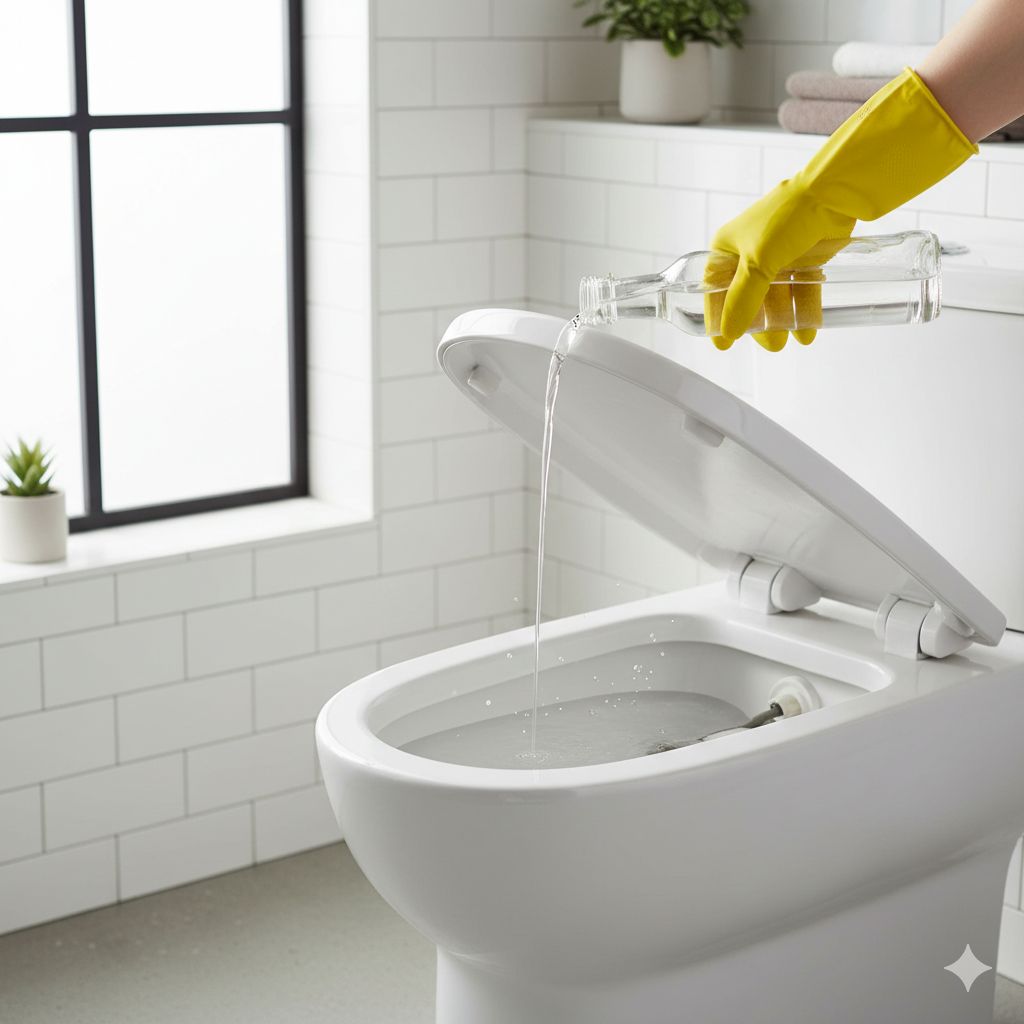
Pour white vinegar into the tank until the stained areas are covered. Vinegar is great for breaking down mineral deposits and killing mild bacteria.
Step 5 – Let It Soak
Let the vinegar sit for at least 1–2 hours. For heavy buildup, you can leave it overnight.
Step 6 – Gently Scrub
Use a sponge or soft brush to scrub the tank walls and metal parts gently. Avoid scrubbing rubber components too hard.
Step 7 – Turn Water Back On and Flush
Turn the valve back on, let the tank fill, and flush a few times to rinse everything out.
That’s it, you’ve successfully learned how to clean a toilet tank without using harsh chemicals.
How to Remove Hard Water Stains From a Toilet Tank?
Hard water leaves stubborn mineral deposits that look like chalky crust or brown streaks.
Vinegar works best for dissolving mineral buildup naturally.
For tough stains:
- Soak paper towels in vinegar
- Press them onto stained areas
- Leave for several hours
- Scrub gently and rinse
You may need to repeat this process if buildup has been there for years.
How to Remove Mold and Mildew in a Toilet Tank?
If you see black or dark green spots, mold may be growing inside.
To remove mold safely:
- Wear gloves
- Use vinegar or hydrogen peroxide
- Scrub gently
- Improve bathroom ventilation afterward
Keeping the bathroom dry and well-ventilated helps prevent mold from coming back after you clean your toilet tank.
Can You Use Bleach to Clean a Toilet Tank?
Bleach can disinfect, but frequent use can damage rubber seals and toilet components.
Occasional diluted bleach use is okay for severe mold, but never use bleach tablets inside the tank. They slowly erode parts and can lead to leaks.
Vinegar is a safer long-term option.
What NOT to Do When Cleaning a Toilet Tank?
To avoid expensive repairs, remember:
- Don’t use steel wool or abrasive scrubbers
- Don’t mix vinegar and bleach (dangerous fumes)
- Don’t bend or force moving parts
- Don’t leave chemical cleaners sitting for days
Your goal is to clean a toilet tank, not damage it.
How to Keep Your Toilet Tank Clean Longer
Once it’s clean, simple habits help maintain it.
- Pour 1–2 cups of vinegar into the tank every few months
- Keep your bathroom ventilated
- Fix leaks quickly
- Avoid drop-in cleaning tablets
Preventive care makes future cleaning faster and easier.
Common Issues You Might Notice While Cleaning
While learning how to clean a toilet tank, you might spot problems like:
- Rusted bolts
- Worn flapper
- Corroded chain or handle parts
If parts look badly worn, it may be time for a simple repair kit or plumber visit.
Final Thoughts
Now you know exactly how to clean a toilet tank the safe and effective way. It’s one of those small home tasks that makes a big difference, reducing odors, preventing stains, and helping your toilet parts last longer. With just vinegar, a brush, and a little patience, you can keep your toilet tank fresh, clean, and running smoothly all year round.

