
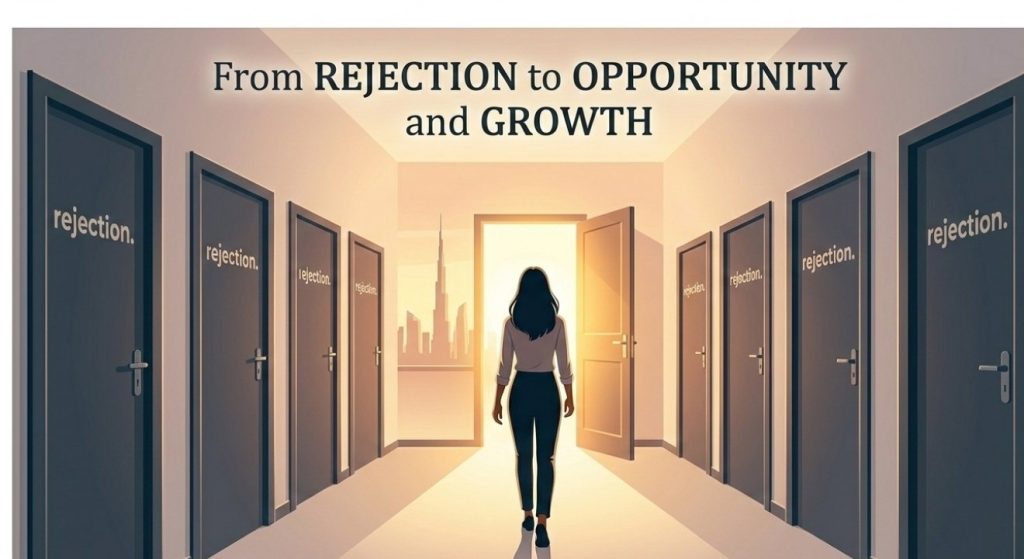

Rejection is never easy. Whether it’s a job you didn’t get, a relationship that didn’t work out, or an opportunity that slipped away, it can feel deeply personal. But learning how to handle rejection is one of the most powerful life skills you can develop. The truth is, rejection isn’t the end of your story; it’s often just a redirection toward something better.
Think of rejection like a closed door in a long hallway. One door shuts, but dozens remain unopened.
Let’s explore how to deal with rejection in a healthy, confident, and growth-focused way.
Why Rejection Hurts So Much (Understanding the Emotional Impact)?
Before learning how to cope, it helps to understand why rejection feels painful in the first place.
The Psychology Behind Rejection Pain?
Humans are wired for connection. Thousands of years ago, being rejected by a group meant survival risk. Even today, your brain reacts to rejection similarly to physical pain.
Research from the University of Michigan shows that social rejection activates the same brain regions as physical injury. That’s why rejection can feel genuinely painful — not just emotionally, but physically too.
Why Humans Fear Rejection Naturally?
Fear of rejection comes from:
- Desire for acceptance
- Need for belonging
- Self-worth validation
- Fear of failure
- Social comparison
It’s normal. Everyone experiences it.
How Rejection Affects Self-Esteem and Confidence?
Rejection can trigger thoughts like:
- “I’m not good enough.”
- “Something is wrong with me.”
- “I’ll never succeed.”
But these thoughts are interpretations — not facts.
How to Handle Rejection in a Healthy Way (Step-by-Step)?
If you’re wondering how to handle rejection, here’s a practical roadmap.
Step 1: Allow Yourself to Feel the Emotions
Don’t suppress your feelings. Acknowledge them.
You might feel:
- Sad
- Angry
- Embarrassed
- Disappointed
- Hurt
Emotions are temporary waves — they pass if you let them.
Step 2: Avoid Taking Rejection Personally
Rejection often reflects:
- Timing
- Fit
- Circumstances
- Preferences
- External factors
Not your worth as a person.
Even highly successful people get rejected constantly.
Step 3: Reframe the Situation Positively
Ask yourself:
- What can I learn?
- What might this lead to?
- Was this truly right for me?
Rejection often protects you from the wrong path.
Step 4: Learn What You Can From the Experience
Growth comes from reflection, not blame.
Questions to consider:
- What went well?
- What could improve?
- What skills can I develop?
Step 5: Focus on What You Can Control
You can’t control outcomes — only effort.
Focus on:
- Skill improvement
- Preparation
- Mindset
- Persistence
Step 6: Take Action and Move Forward
Momentum heals faster than rumination.
Do something small:
- Apply again
- Try a new opportunity
- Improve a skill
- Connect with someone new
Action rebuilds confidence.
Healthy Coping Strategies After Rejection
Emotional Coping Techniques
Helpful ways to process rejection:
- Talking to someone you trust
- Writing your feelings
- Meditation or breathing exercises
- Physical activity
Mental Resilience Exercises
Train your mind like a muscle:
- Positive self-talk
- Cognitive reframing
- Visualization
- Gratitude practice
Self-Care Practices That Help Healing
Self-care isn’t luxury — it’s recovery.
Examples:
- Sleep
- Exercise
- Healthy food
- Time in nature
- Relaxation
How to Handle Rejection Without Losing Confidence?
Confidence doesn’t come from success — it comes from resilience.
Building Emotional Resilience
Resilient people:
- Accept setbacks
- Adapt quickly
- Keep perspective
- Stay hopeful
Resilience grows through experience.
Strengthening Self-Worth
Your value isn’t defined by:
- One person’s opinion
- One decision
- One outcome
Self-worth is internal.
Turning Rejection Into Motivation
Many people succeed because of rejection, not despite it.
Use rejection as fuel.
How to Handle Rejection in Different Areas of Life?
Rejection happens everywhere.
How to Handle Romantic Rejection?
Remember:
- Attraction is subjective
- Compatibility matters
- Rejection prevents mismatched relationships
Someone not choosing you doesn’t reduce your value.
How to Handle Job Rejection?
Job rejection often depends on:
- Competition level
- Company needs
- Timing
- Internal candidates
Ask for feedback when possible and improve.
How to Handle Social Rejection or Friendship Loss?
People grow apart. It’s normal.
Focus on:
- Healthy relationships
- Mutual respect
- Supportive environments
How to Handle Academic or Career Rejection?
Failure in education or career is common before success.
Many successful entrepreneurs failed multiple times first.
What Rejection Can Teach You (Growth Mindset Perspective)?
Rejection as Redirection
Sometimes rejection moves you toward better opportunities. Many people later realize rejection was beneficial.
Lessons Hidden Inside Failure
Rejection teaches:
- Patience
- Persistence
- Self-awareness
- Emotional strength
Personal Growth Through Challenges
Struggles build character. Comfort zones don’t create growth, challenges do.
Common Mistakes People Make After Rejection
Avoid these traps.
Overthinking and Rumination
Repeating the event mentally increases pain. Instead, shift focus to the future.
Self-Blame and Negative Thinking
Don’t label yourself as:
- Failure
- Unworthy
- Inadequate
These are cognitive distortions.
Avoidance and Giving Up Too Soon
Fear can stop progress. The solution? Keep trying.
How to Build Resilience Against Future Rejection?
Developing Emotional Strength
Practice:
- Accepting uncertainty
- Emotional regulation
- Perspective thinking
Improving Confidence and Self-Image
Confidence grows from:
- Achievements
- Skill building
- Self-respect
- Action
Practicing Healthy Detachment
Detach from outcomes. Focus on effort, not results.
Signs You Are Handling Rejection Well
You’re healing if:
- Pain decreases over time
- You regain motivation
- You stay hopeful
- You try again
- You learn from experience
Recovery isn’t instant, it’s gradual.
Motivational Perspectives on Rejection From Successful People
Many famous individuals faced rejection:
- Walt Disney was fired for “lack of creativity.”
- Oprah Winfrey was told she wasn’t fit for television.
- J.K. Rowling was rejected by multiple publishers.
- Michael Jordan was cut from his high school basketball team.
Rejection often precedes success.
Practical Exercises to Overcome Rejection Faster
Cognitive Reframing Exercise
Write:
- What happened
- Your interpretation
- A more balanced perspective
Confidence-Building Journaling Prompts
- What are my strengths?
- What have I achieved before?
- What did I learn from this?
Exposure and Growth Challenges
Do things that risk rejection:
- Ask questions
- Try opportunities
- Practice social courage
Confidence grows through exposure.
When Rejection Feels Overwhelming (When to Seek Support)?
Sometimes rejection hits deeply.
Signs You May Need Emotional Support
- Persistent sadness
- Anxiety
- Loss of motivation
- Negative self-beliefs
- Isolation
Talking to Friends, Mentors, or Therapists
Support speeds recovery. You don’t have to handle everything alone.
Professional Help Options
Therapists and counselors provide tools to manage emotions effectively. Seeking help is strength, not weakness.
Final Thoughts
Rejection is not proof that you’re not good enough, it’s proof that you’re trying. Every successful person has faced rejection multiple times. What separates them isn’t talent or luck, it’s persistence.
Learning how to handle rejection changes your life because it removes fear. And when fear disappears, possibilities expand.
Remember: rejection doesn’t close your future, it reshapes it. Sometimes the path you didn’t choose becomes the path that chooses you.
FAQs
Because the brain processes social rejection similarly to physical pain, triggering emotional distress and survival instincts.
It varies. Minor rejection may heal in days, while deeper rejection can take weeks or months. Emotional processing speed differs for everyone.
Focus on action, distraction, and reframing thoughts. Staying busy reduces rumination.
They treat rejection as feedback, not failure. They learn, adapt, and try again.
Start with small wins, skill improvement, positive self-talk, and supportive environments.

